Improving Food Security Through Climate Mitigation and Adaptation: Land, Livelihoods, and Nature-Based Solutions
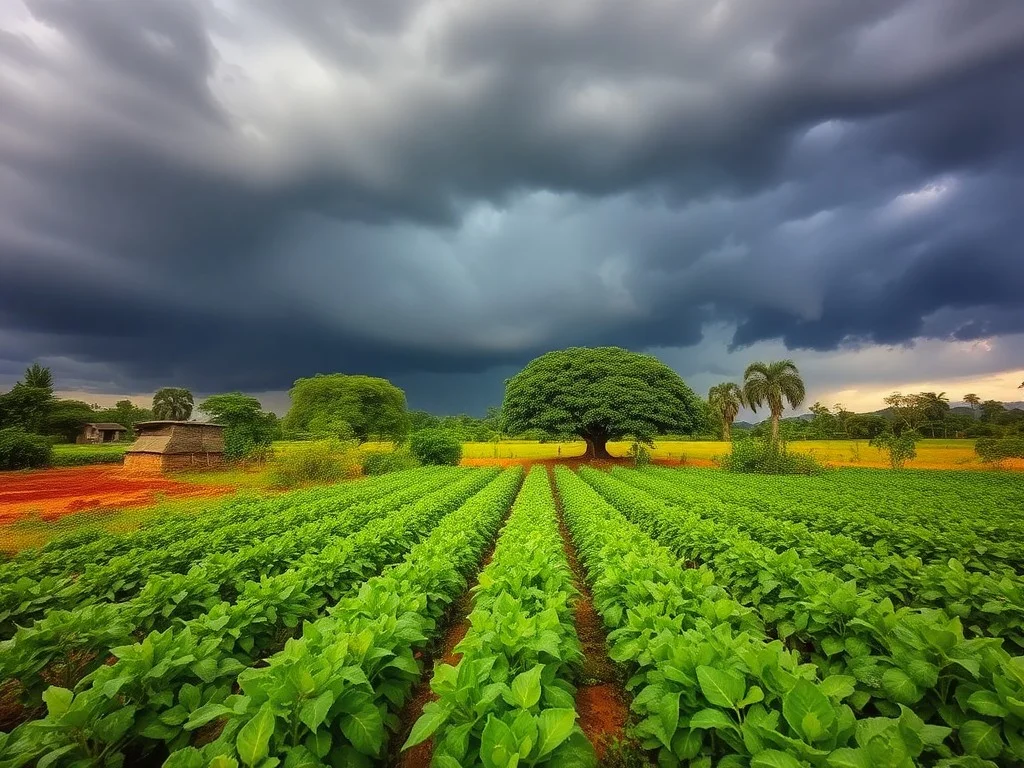
This image was generated by AI and may not depict real events.
Climate change poses a significant threat to food security, particularly in areas where populations rely on smallholder agriculture. Climate adaptation strategies, such as land management and nature-based solutions, can help protect livelihoods and improve food security.
Climate change disrupts food availability and access, affecting rural populations in low- and middle-income countries. Climate adaptation is critical to protect livelihoods and sustain access to healthy landscapes. Adaptation strategies like land management and agroforestry can influence household and community responses to climate risks. Nature-based climate solutions, such as reforestation and coastal wetland protection, can reduce greenhouse gas emissions and enhance food security. These solutions can increase resilience to climate shocks, but may involve land system trade-offs. Empirical evidence on the benefits of climate mitigation and adaptation is limited, highlighting the need for interdisciplinary research.
This content was automatically generated and/or translated by AI. It may contain inaccuracies. Please refer to the original sources for verification.